.jpg)
Useful starting conditions
- Exposed water or steam assets with known inspection concerns
- Practical RGB and thermal camera positions
- Operators available to confirm, dismiss, and annotate events
- A baseline inspection or escalation process to compare
A Leak Sight AI pilot focuses on 10–30 exposed, high-risk locations over approximately three months, with operators involved in every review cycle.
Program Structure
The first deployment is designed to test camera fit, evidence quality, false-signal handling, operator usefulness, and maintenance handoff without making unsupported claims from a broad rollout.
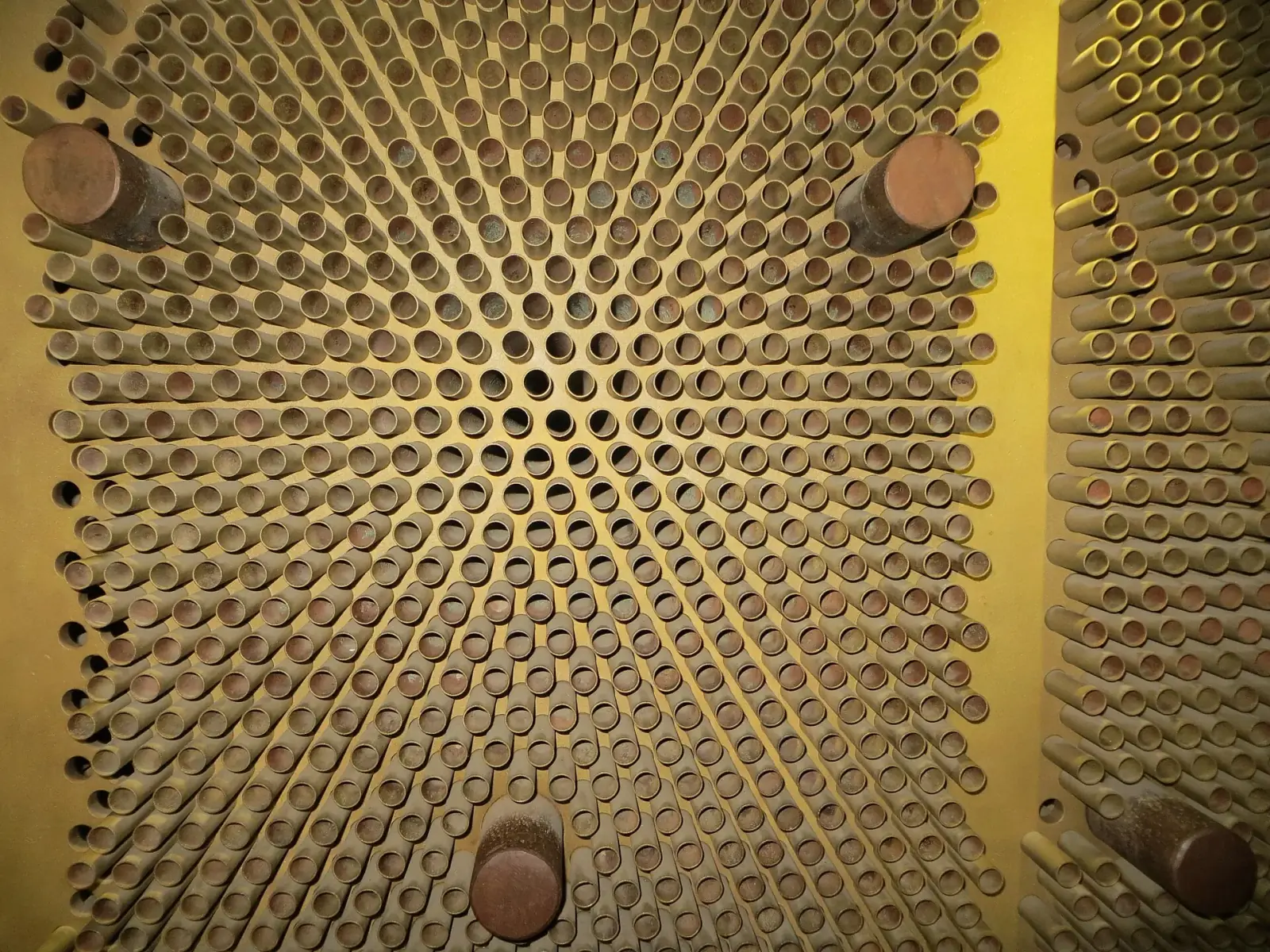 Bounded Equipment Scope
Complex heat-transfer equipment reinforces why camera placement, thermal baselines, and asset-specific calibration are defined before monitoring starts.
Photo: Alex Liivet · CC0
Pilot Sequence
Timing varies with installation access, facility schedules, and event availability. The program is approximately three months, not a guarantee of a fixed calendar duration.
Select exposed assets, define current inspection baselines, and agree success measures.
Confirm camera views, monitored zones, operating context, retention, and access.
Assess alerts with operators, label false signals, and adjust facility-specific settings.
Compare the pilot against the agreed measures and document deployment constraints.
Success Measures
The pilot records current practice first, then evaluates whether the system produces useful, timely evidence under the selected conditions.
Facility Fit
Pilot Qualification
The request form collects enough context to assess asset visibility, camera fit, operator availability, and a responsible pilot scope.